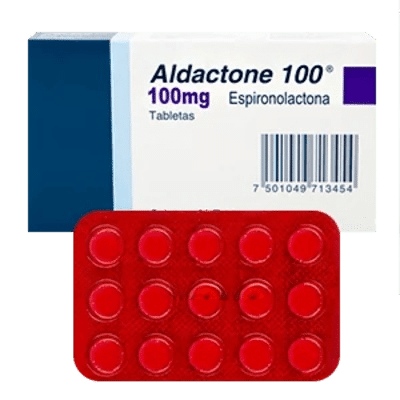
Aldactone
3 customer reviewsWhat is it?
Aldactone is a potassium-sparing diuretic that acts as an aldosterone antagonist. Its mechanism of action involves competitive blockade of aldosterone receptors in the distal nephrons. This results in a moderate diuretic effect that occurs within 2-5 days of treatment initiation and persists for 2-3 days after discontinuation. It also increases sodium excretion and decreases potassium and magnesium excretion, thereby reducing urine acidity. Aldactone also exhibits a mild hypotensive effect, which becomes apparent after 2-3 weeks of therapy. It is used in combination with other medications to treat hypertension and also promotes fluid removal in congestive heart failure, liver cirrhosis, and kidney disease.
Composition
Aldactone contains a number of active and excipient ingredients that ensure its effectiveness and safety. First and foremost, its worth noting the active ingredient, spironolactone, which is responsible for the drugs primary therapeutic effect. This component blocks the effects of aldosterone, helping the body eliminate excess sodium and water while maintaining potassium levels.
- Spironolactone is the main active ingredient responsible for the diuretic effect.
- Magnesium, which is also included, helps maintain electrolyte balance.
- The excipients help improve the absorption and distribution of the medication in the body.
This combination of ingredients makes Aldactone an effective product for treating blood pressure and excess fluid in the body, while minimizing the risk of losing important electrolytes.
How to take it?
Aldactone should be used strictly according to a healthcare professionals recommendations to ensure effectiveness and prevent potential adverse reactions. The drug is typically prescribed at a dosage of 50-100 mg per day for adults to treat hypertension and edema.
- It should be taken once or twice daily, depending on the doctors prescription and the patients individual needs.
- If necessary, the dosage can be gradually increased to 200 mg per day, but this should be done under strict medical supervision.
- It is recommended to take Aldactone after meals to minimize possible gastrointestinal discomfort, and preferably at bedtime.
It is important to remember that to achieve a sustained therapeutic effect, the treatment course typically lasts at least two weeks. For various conditions, such as chronic heart failure or nephrotic syndrome, other dosages may be recommended, and these should be individually adjusted by the doctor.
How does it work?
Aldactone works by reducing aldosterone secretion, which leads to increased sodium and water concentrations in the body and a decrease in blood volume. This allows for a moderate diuretic effect while maintaining the delicate balance of electrographic benefits. Spironolactone, the active ingredient, binds to aldosterone receptors, preventing its effects, which helps stabilize blood pressure and improve edema syndromes.
Its effect begins within the first few days of administration, but it may take several weeks for the full effect to manifest, especially if used to lower blood pressure. It is important to understand that Aldactone can be used as part of a comprehensive therapy, effectively working in tandem with other medications to comprehensively address the medical needs of the patient.
The drug also helps alleviate conditions associated with fluid accumulation in the body, such as heart failure or cirrhosis, due to its ability to facilitate the removal of excess fluid, reducing the burden on the heart and other organs.
Indications
Aldactones indications cover a wide range of conditions associated with fluid retention and electrolyte imbalance. Its use is justified in a variety of medical scenarios.
- Hypertension, where additional blood pressure control and electrolyte balance support are required.
- Heart failure, particularly in cases of congestive heart failure, where fluid removal is necessary.
- Liver cirrhosis, as Aldactone helps reduce ascites and edema characteristic of this condition.
- Nephrotic syndrome, associated with kidney disease and accompanied by edema.
This versatility makes Aldactone a valuable tool in the arsenal of physicians treating patients suffering from various forms of fluid retention and electrographic imbalances.
Contraindications
Despite its effectiveness, Aldactone is not suitable for all patients, and there are some contraindications that must be considered before starting treatment. These restrictions help minimize risks and ensure the safety of therapy.
- Hypersensitivity to any of the drugs components can lead to allergic reactions and should be considered when choosing therapy.
- Addisons disease, which is characterized by cortisol deficiency, makes the use of Aldactone unsafe.
- Hyperkalemia, i.e., high potassium levels in the blood, is a strict contraindication due to the risk of causing dangerous consequences.
- Concomitant therapy with other potassium-sparing diuretics can lead to excess potassium accumulation.
These contraindications emphasize the importance of individual consultation with a healthcare professional before starting Aldactone to eliminate potential risks and adverse interactions.
Side effects
Like any medication, Aldactone may have side effects, which may vary depending on individual characteristics and duration of use. It is important to understand and manage these side effects promptly.
- Headaches and dizziness may occur with changes in blood pressure.
- Gastrointestinal disturbances, such as nausea or diarrhea, are common with this medication.
- Endocrine changes, such as menstrual irregularities or decreased potency.
- Changes in electrolyte balance require careful monitoring, particularly potassium and sodium levels in the blood.
Physician supervision and timely dosage adjustments can help minimize adverse effects and maintain treatment effectiveness.
Frequently asked questions
Reviews and Experiences
This medication definitely helped improve my condition. The diuretic effect was moderate but lasting—fluid retention was significantly reduced. Within just a couple of days, I noticed an improvement in my overall well-being.
I took Aldactone as prescribed by my doctor, along with other blood pressure medications. Although the initial effects didnt appear until a week later, I appreciated how well it maintained my blood pressure without causing a critical drop in potassium levels.
I was recommended this medication to control swelling and excess fluid. Im pleased with the results, but I had to closely monitor my electrolyte levels because my kidney function was questionable. Fortunately, there were no issues with the analysis.