Amoxil
3 customer reviewsWhat is it?
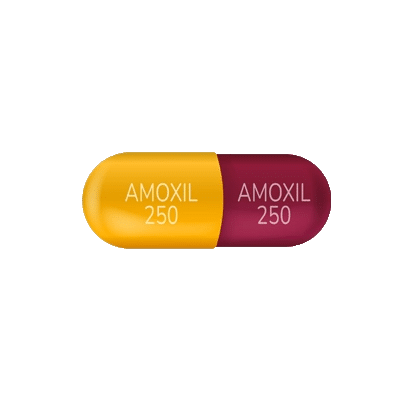
Amoxil is a medication widely used in medical practice to treat bacterial infections. It belongs to the penicillin antibiotic class, making it effective against a wide variety of bacteria. Amoxil is often prescribed for common infections such as upper respiratory tract infections, urogenital infections, and skin infections. This medication is popular due to its high efficacy and generally safe profile, allowing it to be used in many cases without significant health risks. The medication is available in several forms, including capsules and powder for suspension, making it easy to choose the most appropriate form for administration.
Composition
The main component of Amoxil is the active ingredient amoxicillin. It is a penicillin antibiotic with a broad spectrum of activity against gram-positive and gram-negative bacteria. Amoxicillin acts on bacterial cell walls, disrupting their structure and thereby inhibiting the growth and reproduction of pathogens. The drug typically contains additional ingredients that ensure the stability and preservation of the dosage form.
- Amoxicillin
- Additional excipients depending on the dosage form
- Sucrose (for suspension)
- Sodium citrate anhydrous
These ingredients help maintain the activity of the active ingredient and provide the necessary consistency and taste, especially in pediatric formulations such as suspensions. It is important to remember that additional components can cause allergic reactions in people with hypersensitivity, so it is best to read the full composition of the drug before starting treatment.
How to take it?
Amoxil should be used as directed by your doctor and according to the instructions included with the medication. The dosage and form of the medication may vary depending on the patients age, weight, and specific condition. General recommendations will help avoid administration errors and achieve maximum therapeutic effect.
- Before starting treatment, be sure to read the instructions and follow your doctors instructions to determine the correct dosage and form of the medication.
- Take the medication at the same time every day to maintain consistent levels of the medication in your body and achieve the best treatment results.
- The dosage and duration of treatment depend on the type of infection and can range from a few days to a longer period for serious illnesses.
It is especially important to take the medication regularly and consistently, as discontinuing or irregular use can lead to the development of bacterial resistance to the antibiotic and reduced treatment effectiveness.
How does it work?
Amoxil works by disrupting bacterial cell walls. The active ingredient, amoxicillin, inhibits the synthesis of peptideglycan, an important component of bacterial cell walls, leading to their breakdown and death. This mechanism of action makes it particularly effective against infections caused by penicillin-sensitive microorganisms.
Amoxils effectiveness is due to its ability to penetrate body tissues and fluids, creating optimal conditions for fighting infection. Rapid and uniform absorption in the gastrointestinal tract ensures the necessary therapeutic effect, and its broad spectrum of activity makes it a choice for the treatment of a number of infectious diseases.
The drug not only suppresses inflammatory processes that have already begun but also prevents their further development. This is achieved through its ability to quickly eliminate not only the symptoms of the disease but also its cause—pathogenic microorganisms. All this makes Amoxil a popular treatment for bacterial infections.
Indications
Amoxil can be prescribed for the treatment of various infectious diseases caused by susceptible microorganisms. Listing all possible indications is difficult, as the drug is widely used to treat many common and serious infections, but the main ones are worth noting.
- Upper and lower respiratory tract infections, such as tonsillitis, bronchitis, and pneumonia.
- Skin and soft tissue infections, including furuncles and abscesses.
- Urogenital infections, such as cystitis, urethritis, and pyelonephritis.
- Gastrointestinal tract infections caused by specific pathogens.
Prescribing is determined by a physician based on diagnostic data and the patients medical history. It is important to consider the individual characteristics of the patient to minimize potential risks and side effects from antibiotic use.
Contraindications
Despite its effectiveness and reliability, Amoxil has contraindications that are important to consider before starting therapy. Ignoring them can lead to adverse effects and complications.
- Allergy to amoxicillin or other penicillin antibiotics.
- History of liver or kidney disease, which can affect the metabolism and elimination of the drug.
- Infectious mononucleosis, as the use of amoxicillin can lead to the development of a skin rash.
- Pregnant and breastfeeding women are advised to exercise caution when using it, although it is considered relatively safe.
If any of the above factors are present, the possibility of using the drug should be discussed with a doctor and, possibly, an alternative treatment should be considered. It is also important to inform your doctor about all concomitant diseases and medications you are taking.
Side effects
When using Amoxil, as with any medication, there is a risk of side effects, which are important to know so that appropriate measures can be taken promptly. Despite the drugs relatively high safety profile, side effects can range from mild to more serious.
- Skin reactions: itching, rash, hives, which may indicate an allergy to amoxicillin.
- Gastrointestinal disorders: nausea, diarrhea, abdominal pain, which may require dosage adjustment.
- Central nervous system reactions, such as dizziness and headaches, although less common.
- Other reactions, including changes in blood counts, require regular monitoring of blood tests during long-term use.
If side effects are severe or persistent, it is recommended to seek medical attention to adjust therapy or select a different medication.
Frequently asked questions
Reviews and Experiences
I took Amoxil on my doctors recommendation to treat a sore throat. The symptoms began to subside on the second day, and by the end of the week I felt completely healthy. The only side effects were mild digestive upset, which resolved on its own.
My child was diagnosed with bronchitis, and we were prescribed this antibiotic. Its great that theres a suspension, as it was easier for my child to take. The effect was very good, although we had to monitor his stool for a while, but otherwise there were no side effects.
After a course of Amoxil, my skin infection problems almost disappeared. The medication worked quickly, and I didnt notice any side effects, even though I was always wary of allergies. Its now my favorite antibiotic; I always keep a bottle in my medicine cabinet in case of a recurrence.