Augmentin
3 customer reviewsWhat is it?
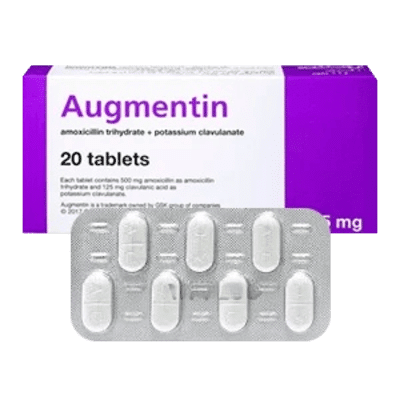
Augmentin is a broad-spectrum antibacterial agent that effectively kills a variety of bacteria. It is effective against both aerobic and anaerobic microorganisms, including gram-negative and gram-positive bacteria. It also protects against beta-lactamase-producing strains, making it suitable for use in a variety of infections, including pneumonia, respiratory tract infections, gastrointestinal tract infections, genitourinary tract infections, postoperative infections, and more. Augmentin contains clavulanic acid, a key component that improves the drugs stability and its ability to resist the destructive action of beta-lactamases.
Composition
Augmentin is unique due to its composition, which includes a combination of two active ingredients that ensure its effectiveness against a variety of infections. Here are the key components of this drug:
- Amoxicillin is a penicillin antibiotic effective against many types of bacteria.
- Clavulanic acid is a beta-lactamase inhibitor that increases amoxicillins resistance to the destructive activity of certain bacteria.
- Additional excipients include various stabilizers and fillers that ensure the formulation and stability of the drug.
Each of these components plays an important role in Augmentin, creating a synergistic effect for the effective treatment of infectious diseases. The combination of amoxicillin and clavulanic acid enables the drug to overcome resistance barriers in certain microorganisms, expanding its therapeutic spectrum.
How to take it?
To achieve maximum effectiveness, it is important to use Augmentin correctly. Follow the instructions precisely to avoid unwanted side effects and achieve the best results. Lets look at the main steps:
- The dosage should be determined by a doctor based on the individual patients characteristics, the severity of the infection, and the sensitivity of the pathogen.
- The tablet should be swallowed whole without chewing, but a chewable form of the medication can be used, which can be chewed before swallowing.
- It is best to take the medication at the same time each day to maintain a consistent interval between doses.
Please remember that taking the medication in higher doses or for longer than prescribed may lead to adverse effects. Therefore, it is advisable to adhere to the prescribed dosage regimen and consult with your doctor regularly with any questions that arise.
How does it work?
Augmentins mechanism of action is based on the synergy of two key components: amoxicillin and clavulanic acid. Amoxicillin, one of the drugs components, exhibits activity against a broad spectrum of bacteria by acting on and disrupting their cell membranes. This leads to the death of bacteria and halts the progression of the infection. However, some bacteria produce enzymes called beta-lactamases, which can destroy amoxicillin, reducing its effectiveness.
In this regard, clavulanic acid acts as a kind of protector for amoxicillin. It inhibits the action of beta-lactamases, preventing their destructive effect on the antibiotic. Thus, Augmentin maintains stable amoxicillin concentrations in the body, allowing it to effectively fight infections, even when bacteria are resistant to certain antibiotics.
The combined action of these two active components allows Augmentin to exert a sustained antibacterial effect and is effectively used to treat a variety of infectious diseases.
Indications
Augmentin is recommended for a number of infectious diseases caused by various types of bacteria. The drug has proven effective in treating the following conditions:
- Respiratory tract infections, such as pneumonia and bronchitis.
- Urinary tract diseases, including urogenital infections.
- Gastrointestinal tract infections leading to digestive disorders.
- Postoperative infections, which may occur following surgery.
- Skin and soft tissue infections requiring antibacterial therapy.
The drugs prescription and dosage should always be discussed with a physician, who will be able to take into account all the specifics of the disease and the patients condition. Despite the wide range of indications, each condition requires an individual approach and careful monitoring during treatment.
Contraindications
Before using Augmentin, it is important to consider any existing contraindications, as improper use of the drug can lead to serious health consequences. Augmentin is not recommended in the following cases:
- A history of allergic reactions to penicillin antibiotics.
- Severe liver failure or kidney problems.
- A history of infectious mononucleosis.
- Hypersensitivity to any of the drugs components or individual intolerance.
Ignoring these contraindications can lead to serious complications, so it is important to consult a doctor before starting therapy. Particular caution should be exercised if you have chronic illnesses or a predisposition to allergic reactions.
Side effects
Side effects may occur when using Augmentin, requiring special attention and, if necessary, medical intervention. The most common side effects include:
- Digestive disturbances, such as dyspepsia, nausea, and vomiting.
- Changes in liver function, manifested as blood count abnormalities or jaundice.
- Allergic reactions, including skin rashes, itching, and swelling.
- Systemic reactions, such as increased fatigue or general weakness.
- Changes in the microflora, which can lead to the development of secondary infections, both fungal and bacterial.
All of the above reactions require discontinuation of the medication and medical attention. Your doctor can adjust your therapy by suggesting alternative treatments. It is very important to monitor your condition and report any changes to your doctor so that treatment can be adjusted promptly.
Frequently asked questions
Reviews and Experiences
I used Augmentin to treat bronchitis, and it worked perfectly. The symptoms subsided quickly, and there were no side effects at all. The medication proved effective and easy to use.
The doctor prescribed the medication to treat my childs ear infection. There were no complications, although we were a little concerned about possible side effects. Ultimately, the treatment was successful and quick.
I was afraid to take antibiotics because of a previous negative experience, but Augmentin was a pleasant surprise. The pneumonia subsided, and even my appetite quickly returned. Im glad I chose this medication.