Clonidine
3 customer reviewsWhat is it?
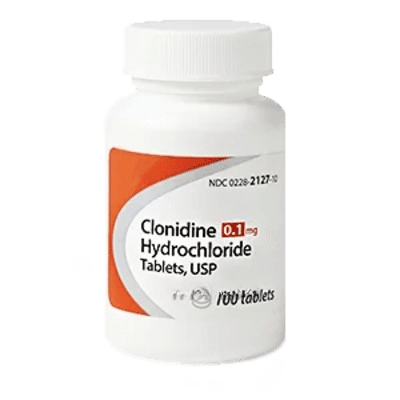
Clonidine is a medication widely used to treat hypertension. It is available as tablets for oral administration and as patches applied to the skin. Clonidine works by altering the concentration of certain chemicals in the blood. It stimulates alpha-2 adrenergic receptors in the brainstem, which reduces the transmission of nerve signals from the brain to other parts of the body. This leads to a decrease in peripheral resistance, renal vascular resistance, heart rate, and blood pressure.
Composition
Clonidine contains active and auxiliary components that ensure its effectiveness and stability. The active ingredient, clonidine, has the primary pharmacological effect of lowering blood pressure. Additionally, the composition includes excipients that facilitate the formation of the drug and its absorption by the body. These components may include various stabilizers, fillers, and preservatives to ensure long-term shelf life.
- Clonidine is an active ingredient that acts on the central nervous system and lowers blood pressure.
- Stabilizers maintain the drugs shape and structure, preserving its properties throughout its shelf life.
- Preservatives prevent the growth of microorganisms, ensuring the drugs safety.
- Excipients help create the desired tablet or patch shape for convenient administration.
These components interact with each other, ensuring clonidines stability and effectiveness in treating hypertension.
How to take it?
Clonidine is available in various forms, and it is important to follow the recommended instructions to achieve the best therapeutic effect. When taken as a tablet, clonidine is typically taken twice daily. The dosage is individualized based on the patients response to medication and their blood pressure. Do not begin treatment with clonidine without consulting a doctor.
- Take clonidine as prescribed by your doctor, usually twice daily with a small amount of water.
- If using patches, apply them to a hairless area of skin on your upper arm or torso once a week.
- The patch should be placed on different areas of the skin to avoid irritation.
It is important to follow your doctors recommendations and avoid unintentional dosage changes to avoid any negative health consequences.
How does it work?
Clonidine acts by affecting the central nervous system, altering vascular tone and lowering blood pressure. Its primary mechanism of action is stimulation of alpha-2 adrenergic receptors located in the brainstem. This reduces the transmission of impulses from the brain to the peripheral parts of the body, thereby lowering vascular resistance and heart rate.
Clonidines effect manifests itself in a comprehensive improvement in circulatory parameters. Reducing peripheral resistance helps lower blood pressure, while lowering heart rate improves circulation. Thus, clonidine helps normalize cardiovascular function, reducing the risk of hypertension-related complications.
Managing blood pressure with clonidine allows patients to improve their quality of life, reduce the risk of cardiovascular disease, and maintain stable health. Proper use of this medication can significantly impact a patients overall well-being.
Indications
Clonidine is used to treat various conditions and diseases associated with hypertension. It is indicated for patients in whom other antihypertensive medications are ineffective or cause undesirable side effects. Clonidine effectively controls blood pressure and prevents complications associated with high blood pressure.
- Maintains normal blood pressure in patients diagnosed with hypertension.
- Reduces the risk of cardiovascular complications, such as myocardial infarction or stroke.
- Improves patient well-being by managing symptoms associated with high blood pressure.
- As an adjunct to other cardiovascular diseases requiring blood pressure control.
Proper adherence to clonidine recommendations improves quality of life and promotes patient health.
Contraindications
Like any medication, clonidine has contraindications that must be considered before beginning treatment. Particular attention should be paid to possible restrictions to avoid unwanted health consequences. The main contraindications are related to individual intolerance to the drugs components and certain medical conditions that make clonidine use undesirable or even dangerous.
- Hypersensitivity to clonidine or any of the components of the drug.
- Sick sinus syndrome, which may impair normal heart function.
- Bradycardia or slow heart rate, which may be aggravated by the use of clonidine.
- Presence of second- or third-degree heart block, which requires special caution when prescribing clonidine.
- Renal failure or acute conditions affecting renal function.
- Presence of serious psychiatric disorders, such as depression, which may worsen with clonidine.
Given these contraindications, it is necessary to consult a doctor to assess the possible risks and make the appropriate decision about prescribing clonidine.
Side effects
Like any medication, clonidine can cause side effects, which are important to know so you can take action promptly. While many patients can tolerate the drug without serious complications, some may experience adverse reactions. Potential side effects of clonidine include both general and more specific reactions that may require medical intervention.
- Hypersensitivity reactions, including rash or itching.
- Dizziness and general weakness, which may affect the ability to perform normal activities.
- Slow or rapid heart rate, which may require dosage adjustment.
- Dry mouth and a feeling of constant thirst caused by changes in the bodys chemical balance.
- Weight gain and swelling, which may be associated with fluid retention.
- In rare cases, hallucinations and confusion may occur, requiring immediate medical attention.
If any alarming symptoms appear, it is important not to ignore them but to seek medical advice to assess the need for treatment adjustments.
Frequently asked questions
Reviews and Experiences
Ive been taking clonidine for several months as prescribed by my doctor for hypertension. Its proven to be very effective, and my blood pressure has stabilized. Ive had virtually no side effects, except for a slight dry mouth during the first few days.
I was prescribed clonidine after other medications failed due to side effects. It helped lower my blood pressure significantly, and I feel much better. The main thing is to stick to the dosage and not miss doses, then everything will be fine.
Clonidine was prescribed in addition to other blood pressure medications. I was hesitant at first, but after starting treatment, I felt an improvement. My blood pressure no longer fluctuates as much as before, and my overall health has improved.