Verified
My chin and jaw acne was still active during the first month. By the third pack, I had fewer painful spots and my skin was less oily. I had mild nausea at first, which improved after taking it with dinner.
28 Jan 2026

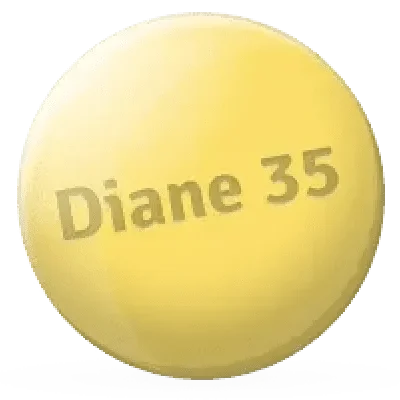
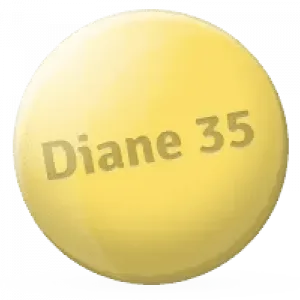
Diane 35 is a combined hormonal medicine for women with androgen-sensitive acne or hirsutism. Its anti-androgenic action helps reduce sebum production and unwanted hair growth while its hormonal combination also provides contraception.
Diane 35 is a combined hormonal tablet containing cyproterone acetate and ethinylestradiol. It is used for women with moderate-to-severe androgen-sensitive acne or hirsutism when local treatments or antibiotics have not helped. Cyproterone reduces androgen activity while the hormonal combination suppresses ovulation and provides contraception.
Each Diane 35 tablet contains cyproterone acetate and ethinylestradiol. The amount of each active ingredient is stated on the pack—follow the leaflet. It combines an anti-androgenic progestin with a synthetic oestrogen, giving it both skin-directed hormonal effects and contraceptive activity. [2]
Cyproterone acetate is a progestin with anti-androgenic activity. It blocks androgen effects at target tissues such as the sebaceous glands and hair follicles. Less androgen stimulation can mean less oil production, fewer inflammatory acne lesions, and slower development of coarse androgen-sensitive hair.
Cyproterone acetate also contributes to ovulation suppression. This matters because ovulation suppression is part of Diane 35’s contraceptive mechanism.
Ethinylestradiol is a synthetic oestrogen used in combined hormonal contraceptives. It stabilises the menstrual cycle and supports suppression of the hormonal signals that trigger ovulation. It also raises sex hormone-binding globulin, a blood protein that binds circulating testosterone and lowers the amount available to act on the skin.
The ethinylestradiol component is one reason Diane 35 needs a careful risk assessment. Oestrogen-containing tablets can raise the risk of blood clots in susceptible women.
The standard regimen is one tablet daily for 21 consecutive days, followed by a seven-day tablet-free interval. A withdrawal bleed commonly occurs during that break. The next strip starts after seven days, even if bleeding has not fully stopped.
Missing tablets can reduce contraceptive protection. The appropriate action depends on when the missed tablet occurred in the cycle and how many tablets were missed. Taking a late tablet as soon as remembered is usually appropriate, while a missed tablet may require additional barrier contraception for a short period.
Cyproterone acetate reduces androgen activity by blocking androgen effects at the sebaceous glands and hair follicles. Ethinylestradiol suppresses the hormonal signals that trigger ovulation and raises sex hormone-binding globulin, which binds circulating testosterone and lowers the amount available to act on the skin. The combined hormonal action also thickens cervical mucus and changes the uterine lining.
Diane 35 is prescribed for women of reproductive age whose acne, oily skin, or excessive facial and body hair is linked to androgen sensitivity. Androgens are hormones present in all women in small amounts; when their effect on skin and hair follicles is stronger, they can increase sebum production and stimulate coarse hair growth.
The treatment is intended for moderate-to-severe acne, with or without seborrhoea, and for hirsutism. Its contraceptive action is clinically relevant, yet Diane 35 is usually selected for androgen-related skin or hair symptoms rather than as a first-choice contraceptive alone. The EMA concluded that its benefits outweigh its risks in appropriately selected women when used for approved indications. [1]
Diane 35 is generally considered after acne treatments such as topical retinoids, benzoyl peroxide, topical antibiotics, or an adequate course of oral antibiotics have not produced sufficient control. For hirsutism, it may be considered when unwanted hair growth is persistent and clearly affects quality of life.
It is not a rapid acne treatment. In clinical practice, prescribers often explain that inflammatory spots may continue during the first one or two cycles before hormonal improvement becomes clearer. Excess hair responds more slowly because existing coarse hairs do not disappear immediately; reduced androgen stimulation mainly affects new growth over time.
Treatment choices depend on the main problem: acne, hirsutism, menstrual symptoms, contraception, or a combination of these. Diane 35 has a specific anti-androgen role that is not shared equally by every combined hormonal tablet.
| Treatment approach | Main role | Key limitation |
|---|---|---|
| Diane 35 with cyproterone acetate and ethinylestradiol | Acne or hirsutism linked to androgen sensitivity, with contraception | Higher clot-risk attention than some combined pills |
| Topical acne treatment | Comedones, mild acne, local skin treatment | Does not treat hormonal hirsutism or provide contraception |
| Standard combined hormonal contraception | Pregnancy prevention and cycle control | Anti-androgen effect varies by progestin |
Generic medicines containing cyproterone acetate 2 mg and ethinylestradiol 35 micrograms have the same active substances and are used for the same therapeutic purposes. A switch between hormonal treatments should be planned so that tablets do not overlap unnecessarily.
Progestins are synthetic substances that act in ways related to progesterone. Cyproterone acetate is distinctive because it also has strong anti-androgenic activity.
Other progestins used in hormonal contraception include desogestrel, gestodene, and drospirenone. Their effects on acne, bleeding pattern, fluid retention, and clot risk are not identical. A tablet that suits one person’s skin or cycle may not suit another person’s medical history.
Diane 35 is not for you if you have a current or previous blood clot in a leg, lung, heart, brain, or another organ. It is also unsuitable for women with an inherited tendency to form clots, major surgery with prolonged immobility, or a history of stroke or heart attack.
Avoid Diane 35 if you have:
Several medicines can reduce contraceptive reliability by increasing hormone metabolism. These include rifampicin, rifabutin, certain anti-seizure medicines such as carbamazepine and phenytoin, some HIV treatments, and St John’s wort. Potassium-sparing medicines are not the main concern with Diane 35; enzyme-inducing treatments are.
Smoking raises cardiovascular risk, with the concern becoming greater from age 35 onwards. Obesity, a close relative with early thrombosis, long-distance immobility, and recent childbirth can also alter the balance of risk.
Tell every prescriber that you use Diane 35 before surgery or a period of reduced mobility. Temporary immobility can add to clot risk and may change the treatment plan.
A new aura can involve flashing lights, zig-zag lines, numbness, speech disturbance, or temporary visual changes. This needs urgent medical assessment because combined hormonal treatment is not suitable for migraine with aura.
Most side effects are hormonal and tend to be most noticeable during the first few cycles. Nausea, breast tenderness, headache, abdominal discomfort, mood changes, altered bleeding patterns, and changes in libido may occur. Spotting between withdrawal bleeds is common early in treatment.
Some women find that nausea settles when the tablet is taken after an evening meal. Others experience persistent symptoms that warrant a treatment review.
The serious risk that receives most attention is venous thromboembolism, often shortened to VTE. A VTE is a blood clot in a vein, usually the deep veins of the leg or the lungs. The EMA found that the risk with cyproterone acetate/ethinylestradiol is low but known, and may be higher than with levonorgestrel-containing combined pills. [3]
Seek urgent medical help for symptoms that may signal a clot, including:
These symptoms are uncommon, yet they should never be ignored.
The most frequent mistake is using Diane 35 alongside another hormonal contraceptive. This duplicates hormonal exposure and increases the risk of adverse effects without improving acne control.
Other errors include:
In clinical practice, doctors often separate two expectations: contraceptive reliability and improvement in androgen-sensitive symptoms. Contraceptive protection depends on correct daily use from the start of treatment. Acne and hirsutism improve more gradually.
Prescribers also look beyond the skin. New severe headache, leg pain after a long journey, breathlessness, major surgery, or starting an enzyme-inducing medicine can change the safety picture quickly. Women who stopped Diane 35 months or years earlier should have their clot-risk factors reassessed before restarting.
Acne improvement commonly becomes noticeable after two to three cycles, while fuller benefit may take several months. The EMA review discussed evidence from more than 30 clinical studies in acne and hirsutism, supporting use in selected women with androgen-sensitive symptoms. Persistent worsening after several cycles needs clinical review rather than simply continuing indefinitely. The 2013 EMA assessment remains a key reference for the indication.
Diane 35 reduces androgen stimulation of new hair growth, so existing coarse hairs do not vanish immediately. Hair follicles have long growth cycles, and visible improvement often takes six months or longer. The WHO’s 2024 contraceptive guidance supports individual assessment of hormonal eligibility, especially when clot-risk factors coexist. Cosmetic hair-removal methods may still be needed while hormonal effects develop.
Diane 35 provides contraceptive protection when taken correctly, but its primary role is treatment of acne or hirsutism related to androgen sensitivity. The MHRA and EMA stress that it should not be combined with another hormonal contraceptive. Women seeking contraception without acne or hirsutism may be offered a different hormonal option based on their health profile. This distinction was reinforced during the EMA’s 2013 regulatory review.
Take a late tablet as soon as it is remembered and continue the remaining tablets at the usual time. The next steps depend on the number of missed tablets and the point in the 21-day cycle, so additional barrier contraception may be needed. The Faculty of Sexual and Reproductive Healthcare published missed-pill guidance in 2023 for combined hormonal contraception. A missed tablet near the start or end of a strip requires more caution than a tablet taken a few hours late.
St John’s wort can reduce the effectiveness of hormonal tablets by increasing the activity of liver enzymes that break down hormones. This can lead to breakthrough bleeding and reduced contraceptive protection. The MHRA’s 2013 safety communication warned about interactions between St John’s wort and hormonal contraceptives, including combined tablets. A non-hormonal method may be needed while the interaction remains relevant.
Yes. Like other combined hormonal treatments, Diane 35 can increase the chance of venous thromboembolism, though the event remains uncommon in healthy women. The risk rises with smoking, obesity, prolonged immobility, surgery, migraine with aura, and personal or family history of clots. EMA findings published in 2013 state that appropriate patient selection is central to maintaining a favourable benefit-risk balance. [4]
Your order will be securely packed and shipped within 24 hours. This is exactly what your package will look like (images of an actual item sent). It has the size and look of a regular private letter (24x11x0.7 cm) and its contents cannot be seen.