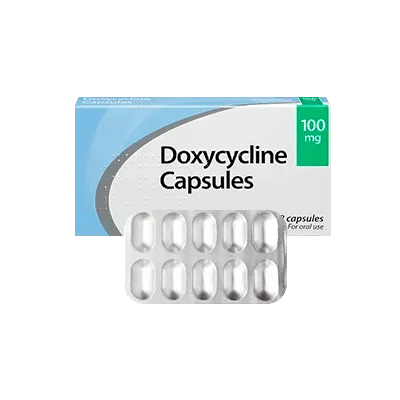
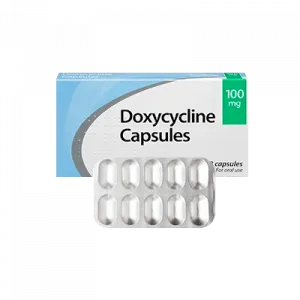
Doxycycline is an oral tetracycline antibiotic for people with susceptible bacterial infections or selected inflammatory skin conditions. It slows bacterial growth by blocking protein production inside bacteria; the dose is stated on the pack — follow the leaflet.
Description
Doxycycline is a tetracycline antibiotic supplied as oral capsules. The dose is stated on the pack — follow the leaflet. Its active ingredient is doxycycline, and it is used for susceptible bacterial infections and selected inflammatory skin conditions.
Composition
Each capsule contains the dose stated on the pack — follow the leaflet — of doxycycline for oral use. Doxycycline belongs to the tetracycline antibiotic group and treats infections caused by bacteria that are sensitive to it. It does not treat viral illnesses such as colds or influenza.
The capsules are for oral use.
Doxycycline enters bacterial cells and binds to the 30S ribosomal subunit, a structure bacteria use to build proteins. Without those proteins, susceptible bacteria cannot multiply normally. The NHS lists doxycycline for several bacterial infections, acne and rosacea, while treatment choice depends on the infection site and likely organism [1].
Take each capsule with a full glass of water. A small sip is a common cause of throat irritation with doxycycline.
Dosage and usage
Take the prescribed number of capsules at the same time each day where possible; the dose is stated on the pack — follow the leaflet. Swallow the capsule whole with plenty of water while sitting or standing. Food may reduce nausea.
Take the capsule with a full glass of water.
Stay upright for at least 30 minutes afterwards.
Separate doxycycline from indigestion remedies, mineral supplements and multivitamins containing calcium, magnesium, aluminium, zinc or iron.
Keep the timing consistent during a treatment course.
If a dose is missed, take it when remembered unless the next dose is due soon. Do not take two doses together.
A frequent mistake is taking doxycycline with a calcium-rich drink or an iron supplement at breakfast. Minerals bind to doxycycline in the gut and reduce the amount absorbed. Leave a gap of at least two to three hours between doxycycline and these products.
For acne treatment, visible improvement is usually gradual. Stopping after a few days because spots remain unchanged is one of the most common reasons a course appears unsuccessful.
How it works
Doxycycline enters bacterial cells and binds to the 30S ribosomal subunit, a structure bacteria use to build proteins. Without those proteins, susceptible bacteria cannot multiply normally.
Indications
Prescribers use Doxycycline for infections where tetracycline-sensitive bacteria are suspected or confirmed. It can also reduce inflammation in some skin conditions, which explains its use beyond acute infections.
Common clinical uses include:
Chest infections caused by susceptible bacteria.
Sexually transmitted infections, including infection with Chlamydia trachomatis.
Certain urinary tract infections when culture results support doxycycline use.
Gum and dental infections where an appropriate bacterial target is present.
Lyme disease, depending on symptoms, stage and clinical assessment.
Acne, where it reduces Cutibacterium acnes activity and skin inflammation.
Rosacea, where its anti-inflammatory action can help papules and pustules.
Infections linked to Mycoplasma species.
Antibiotics work best when matched to the infection. A cough, facial redness or urinary discomfort does not automatically mean doxycycline is the right treatment; bacterial cultures, sexual-health testing and local resistance patterns can alter the choice.
Comparison
Doxycycline is useful because it covers several respiratory, skin and sexually transmitted bacterial pathogens and also has anti-inflammatory activity. Its limitation is that absorption is easily reduced by minerals, and sun sensitivity can be troublesome.
Treatment option
Main clinical distinction
Doxycycline
Tetracycline antibiotic with antibacterial and anti-inflammatory effects
Lymecycline
Tetracycline option often used for acne; suitability depends on skin diagnosis and tolerance
Azithromycin
Macrolide antibiotic used for selected respiratory and sexually transmitted infections
For acne, doxycycline is often chosen when topical treatment alone has not controlled inflammatory lesions. Lymecycline may be considered for similar dermatological indications. For some chest infections or sexually transmitted infections, azithromycin can be appropriate, though resistance patterns and guideline recommendations may favour a different antibiotic.
Lyme disease treatment also depends on the stage of infection, neurological symptoms, pregnancy status and allergy history. A different antibiotic may be required when doxycycline is unsuitable.
Contraindications
This medication is NOT for you if you have had an allergic reaction to doxycycline, another tetracycline antibiotic, or a capsule ingredient. It is also unsuitable during pregnancy and is usually avoided while breastfeeding because tetracyclines can affect developing teeth and bones. Children under 12 years should not usually receive doxycycline unless a specialist identifies a clear clinical reason.
Extra caution is needed with severe liver disease, systemic lupus erythematosus, porphyria, oesophageal disorders, or a history of raised pressure around the brain. Doxycycline can also affect anticoagulant control in people taking warfarin, making closer INR monitoring necessary. The FDA prescribing information details these interactions and contraindication warnings [5].
This medication is NOT for you if you have had an allergic reaction to doxycycline, another tetracycline antibiotic, or a capsule ingredient. It is also unsuitable during pregnancy and is usually avoided while breastfeeding because tetracyclines can affect developing teeth and bones. Children under 12 years should not usually receive doxycycline unless a specialist identifies a clear clinical reason.
Side effects
Doxycycline is generally well tolerated when used as prescribed, though digestive effects and sun sensitivity are common reasons people need practical advice. Nausea, vomiting, diarrhoea, headache and abdominal discomfort can occur. Some people develop thrush because antibiotics can alter normal bacterial balance.
Sunburn can occur quickly.
Photosensitivity deserves special attention. Doxycycline can make skin react more strongly to sunlight, including on cloudy days or through car windows during prolonged exposure. Use protective clothing and high-factor broad-spectrum sunscreen during treatment.
Serious reactions are uncommon but need prompt medical assessment. Stop doxycycline and seek urgent care for swelling of the face, lips or tongue, breathing difficulty, a widespread blistering rash, severe or persistent headache with visual disturbance, severe abdominal pain, or persistent watery diarrhoea. The MHRA has highlighted intracranial hypertension, also called raised pressure around the brain, as a rare but serious risk; symptoms can include headache, nausea, vomiting and blurred or double vision [2].
Oesophagitis is another preventable problem. It can feel like painful swallowing, chest discomfort or a sensation that food is sticking. It is more likely when a capsule is swallowed with little water or when lying down soon afterwards.
If swallowing becomes painful during a course, do not take another capsule while lying down. Prompt clinical advice can prevent a small irritation becoming an ulcer in the oesophagus.
Common mistakes
Several avoidable errors make doxycycline harder to tolerate or less likely to work as intended:
Taking capsules with little water.
Lying down straight after a dose.
Taking iron, calcium, zinc or antacids at the same time.
Using sunbeds or prolonged direct sunlight without protection.
Sharing leftover capsules with another person.
Stopping an infection course early once symptoms ease.
Treating recurrent urinary or sexual-health symptoms without testing.
Combining doxycycline with isotretinoin without prescriber review.
One less obvious problem is assuming diarrhoea is always harmless. Mild looseness can occur, but severe diarrhoea, blood or mucus in stools, fever, or abdominal cramping during or after treatment needs urgent assessment because antibiotic-associated colitis can develop.
What doctors say
In clinical practice, prescribers often value doxycycline because one antibiotic can address several common bacterial and inflammatory conditions. Its oral absorption is good when mineral interactions are avoided, and it can be used in many adults with reduced kidney function without the routine dose reductions required for some other antibiotics.
Doctors also set realistic expectations. Acne and rosacea do not clear after two capsules, and a longer dermatology course requires patience alongside a skin-care plan. For acute infections, improvement may begin within a few days, yet the full prescribed course still matters unless a clinician changes the plan.
A useful clinical distinction is between treatment failure and poor administration. Taking capsules with milk, iron tablets or antacids can lead to low doxycycline exposure even when the antibiotic choice was appropriate.
Frequently asked questions
Can Doxycycline treat acne?
Doxycycline can treat moderate inflammatory acne when bacteria and inflammation contribute to papules, pustules and painful deeper spots. The NHS includes acne among recognised uses, and treatment is often assessed over several weeks rather than a few days. It is commonly paired with topical acne treatment to reduce reliance on long antibiotic courses. A 2023 NHS doxycycline review advises using it exactly as prescribed for the diagnosed condition. A prescriber can review the response and tolerability before extending treatment.
Can Doxycycline be taken with food?
Doxycycline may be taken with food when nausea occurs, provided the meal does not include large amounts of calcium at the same time. Milk, yoghurt, calcium supplements, iron, magnesium and antacids can lower absorption by binding the antibiotic in the digestive tract. Water remains the best drink for swallowing a capsule. The 2018 FDA doxycycline prescribing information advises separating doses from mineral-containing products.
How quickly does Doxycycline work?
For susceptible bacterial infections, symptoms may start improving within a few days, though timing varies with the infection and its severity. Acne and rosacea need longer because reducing inflammation and lesion formation is gradual. Lack of improvement, worsening symptoms or fever after starting treatment can mean the infection needs reassessment. The NHS guidance published in 2023 identifies doxycycline as a treatment whose duration varies by indication.
Does Doxycycline increase sun sensitivity?
Yes, doxycycline can cause photosensitivity, making sunburn or a sun-triggered rash more likely. Wear protective clothing and use broad-spectrum sunscreen throughout treatment, including during everyday outdoor activity. Stop treatment and seek assessment if a severe rash, blistering or marked skin reaction develops. MHRA safety advice issued in 2023 also highlights the need to act promptly on serious adverse symptoms.
Can Doxycycline prevent malaria?
Doxycycline can be used as malaria chemoprophylaxis for selected destinations and travellers. It is taken on a specific daily schedule before, during and after exposure, rather than only on travel days. The destination, pregnancy status, age and other medicines affect whether it is suitable. WHO malaria guidance from 2024 includes doxycycline among recognised prevention options.
What should I do after a missed dose?
Take the missed dose when remembered unless the next scheduled dose is approaching. If it is nearly time for the next dose, skip the missed capsule and continue the regular regimen. Do not double the dose because this increases the chance of nausea, vomiting and oesophageal irritation. FDA prescribing information from 2018 supports maintaining the intended dosing interval rather than taking extra capsules.
Do you offer anonymous delivery?
Your order will be securely packed and shipped within 24 hours. This is exactly what your package will look like (images of an actual item sent). It has the size and look of a regular private letter (24x11x0.7 cm) and its contents cannot be seen.
Doxycycline is used for malaria prevention in selected travel situations. It is started before entering a malaria-risk area, taken daily during exposure and continued after leaving, with timing determined by travel-medicine advice and the destination’s malaria pattern. The WHO malaria guidelines include doxycycline among chemoprophylaxis options for appropriate travellers [3].
Doxycycline also has a role in bacterial STI chemoprophylaxis called doxycycline post-exposure prophylaxis, often shortened to Doxy PEP. This is a specialist prevention strategy rather than a general-purpose antibiotic approach. Evidence from the DoxyPEP study helped inform 2024 CDC guidance for selected groups at high risk of bacterial sexually transmitted infections, with clinical review needed because antibiotic resistance, testing schedules and individual risk all matter [4].
Malaria prevention and Doxy PEP use require different schedules. A course intended for acne, a chest infection or chlamydia should never be repurposed for prevention.
Doxycycline: Reviews and Experiences
A
Alice, 32
Manchester
12 weeks
Verified
Rating: 4.5 out of 5
I used doxycycline for inflammatory acne. My stomach felt unsettled during the first week, then it settled when I started taking it after food with a big glass of water. By week eight, the painful spots were much less frequent.
24 Feb 2026
M
Michael, 34
Bristol
7 days
Verified
Rating: 3.5 out of 5
I took it for a chest infection and felt better after several days. I made the mistake of taking one dose before lying down and had burning pain when swallowing the next morning. Staying upright fixed that problem.
8 Feb 2026
S
Sophie, 35
Leeds
7 days
Verified
Rating: 3.5 out of 5
The treatment was manageable, but sunlight caught me out. I got red much faster than usual on a walk, even though it was not very hot. I used sunscreen and covered my arms for the rest of the course.
17 Feb 2026
R
Rachel, 41
Glasgow
6 weeks
Verified
Rating: 4 out of 5
It helped my rosacea bumps, although the nausea was annoying at first. Taking it after a light meal was easier than taking it on an empty stomach.
29 Jan 2026
Sources
NHS (2023). Doxycycline
Medicines and Healthcare products Regulatory Agency (2023). Doxycycline: reminder of the risk of intracranial hypertension and need for vigilance for symptoms
World Health Organization (2024). Guidelines for malaria
Centers for Disease Control and Prevention (2024). CDC Clinical Guidelines on the Use of Doxycycline Postexposure Prophylaxis for Bacterial Sexually Transmitted Infection Prevention, United States, 2024
U.S. Food and Drug Administration (2018). DORYX MPC: Prescribing Information