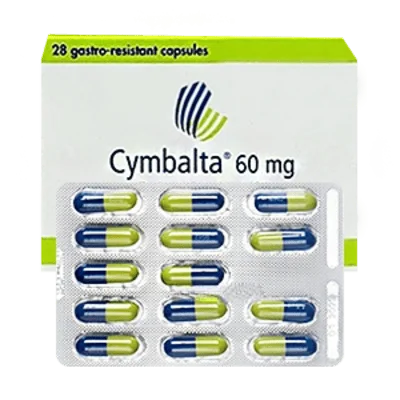
Cymbalta is a gastro-resistant duloxetine capsule for adults with depression, generalised anxiety disorder, or diabetic nerve pain. Its SNRI action prolongs serotonin and noradrenaline signalling to support mood and modify pain processing.
Description
Cymbalta contains duloxetine, an antidepressant in the SNRI class. SNRI means serotonin–noradrenaline reuptake inhibitor: it affects two chemical messengers involved in emotional regulation, alertness, and the way the nervous system processes pain.
The dose is stated on the pack — follow the leaflet. The gastro-resistant capsule is designed to pass through the stomach before releasing duloxetine in the intestine. This coating protects the medicine from stomach acid and helps deliver the dose predictably. EMA product information lists duloxetine for major depressive disorder, generalised anxiety disorder, and diabetic peripheral neuropathic pain in adults. [1]
Composition
Cymbalta is supplied as gastro-resistant capsules for adults. Check the exact composition and strength on the pack and in the leaflet.
Dosage and usage
The dose is stated on the pack — follow the leaflet.
Take the capsule by mouth once daily at the prescribed time.
It may be taken with or without food.
Swallow it whole with water.
Do not crush, chew, split, or open the capsule.
Do not increase the daily amount because symptoms feel unchanged after a few days.
A prescriber may start more gradually in some people, including those prone to nausea or anxiety. Higher doses do not reliably give better results for every condition and may increase adverse effects.
How it works
Duloxetine is a serotonin–noradrenaline reuptake inhibitor, also called an SNRI. Nerve cells release serotonin and noradrenaline into the small gap between cells, then normally take much of it back up. Cymbalta slows that reuptake.
More serotonin and noradrenaline remain available for nerve signalling. In the brain, this can help regulate mood, motivation, anxiety, and concentration. In the spinal cord, the same effect can strengthen descending pain-control pathways, reducing the intensity of some nerve-pain signals.
This dual mechanism separates Cymbalta from an SSRI such as fluoxetine, fluvoxamine, paroxetine, or sertraline, which mainly targets serotonin. It also differs from amitriptyline, a tricyclic antidepressant that affects several receptor systems and can cause more anticholinergic effects such as constipation, blurred vision, and dry mouth.
Indications
Cymbalta is used where mood symptoms, persistent anxiety, or nerve pain require treatment with an SNRI. Duloxetine has a dual role because the same signalling pathways influence both mood and pain sensitivity. The indication determines the treatment goal. Clinicians review symptom severity, functional impact, and previous treatment response. They also consider concurrent medicines and medical conditions before prescribing.
Treatment may be considered for:
Major depressive disorder (MDD): persistent low mood, loss of interest, reduced energy, sleep disturbance, and impaired daily function.
Generalised anxiety disorder (GAD): excessive anxiety and worry occurring on most days, often alongside restlessness, muscle tension, poor sleep, or difficulty concentrating.
Diabetic peripheral neuropathy: burning, shooting, tingling, or electric-shock-like pain caused by diabetic nerve damage.
Fibromyalgia: duloxetine is used for fibromyalgia in some clinical settings, where widespread pain, fatigue, and sleep disruption overlap.
Stress urinary incontinence: duloxetine has been used for this condition in selected settings because noradrenaline can influence urethral muscle tone.
NICE guidance recognises duloxetine as an option for neuropathic pain, while treatment decisions for depression and GAD take account of symptom pattern, previous response, sleep, pain, and other medicines. [2]
Comparison
Antidepressant selection is individual. A person with depression and prominent neuropathic pain may respond differently from someone whose main difficulty is panic, insomnia, sexual side effects, or chronic fatigue.
Medicine group
Main mechanism
Typical clinical fit
Duloxetine in Cymbalta
SNRI acting on serotonin and noradrenaline
Depression, GAD, and neuropathic pain where dual-action treatment is useful
Venlafaxine or desvenlafaxine
SNRI, with stronger noradrenaline activity at higher doses
Depression or anxiety when another SNRI is preferred
Serotonin-focused action or broader receptor effects
SSRIs for many mood and anxiety presentations; amitriptyline for selected pain and sleep patterns
Sertraline, fluoxetine, fluvoxamine, and paroxetine are SSRIs. They may be chosen when serotonin-focused treatment suits the symptom pattern, although sexual side effects and withdrawal risk can still occur. Venlafaxine is another SNRI; Effexor and Effexor XR are trade names used for venlafaxine formulations.
Amitriptyline can help some people with neuropathic pain and sleep disturbance, yet daytime sedation, dry mouth, constipation, and cardiac effects can limit its use. The WHO recognises depression as a major contributor to disability, which is why treatment aims include function, sleep, relationships, work, and pain reduction rather than mood scores alone. [4]
Contraindications
Cymbalta is not for you if you have taken an MAOI antidepressant within the previous 14 days, or if you need to start an MAOI within five days of stopping duloxetine. Combining these medicines can trigger dangerous serotonin syndrome.
Allergy to duloxetine or any capsule component.
Severe liver disease, substantial alcohol-related liver risk, or previous duloxetine-related liver injury.
Severe kidney impairment.
Uncontrolled narrow-angle glaucoma, because duloxetine may raise pressure inside the eye.
Bipolar disorder, mania, seizures, or a history of significant bleeding.
Uncontrolled hypertension or a serious heart rhythm problem.
Pregnancy, breastfeeding, or planned pregnancy, where the balance of maternal benefit and neonatal effects needs individual review.
Duloxetine can interact with SSRIs, tricyclic antidepressants such as amitriptyline, lithium, tramadol, triptans, linezolid, and St John’s wort because each can increase serotonergic activity. Phenelzine, marketed as Nardil, and tranylcypromine are MAOI antidepressants that must not be combined with Cymbalta.
When this is not for you
Avoid Cymbalta and seek medical advice first if you have recently used an MAOI, have serious liver or kidney problems, or have had liver injury from duloxetine. Tell the prescriber if you have glaucoma, bipolar disorder, seizures, high blood pressure, heart-rhythm problems, bleeding problems, or are pregnant, breastfeeding, or planning a pregnancy. Also report all antidepressants, pain medicines, herbal products, and medicines that affect bleeding or blood pressure.
Side effects
Nausea is among the most common early effects of duloxetine. Dry mouth, headache, dizziness, sleepiness, insomnia, constipation, sweating, reduced appetite, fatigue, and sexual difficulties can also occur. These effects often appear during the first days or weeks, then lessen as the body adapts.
A smaller group experience raised blood pressure, palpitations, agitation, tremor, urinary hesitation, blurred vision, or worsening anxiety shortly after starting. Duloxetine can affect sexual function, including reduced libido, delayed orgasm, or erectile difficulty. This can be difficult to raise in an appointment, yet it is a recognised medicine effect and not a personal failure.
Seek urgent medical help for symptoms suggesting serotonin syndrome: fever, marked sweating, diarrhoea, agitation, confusion, muscle stiffness, twitching, or a fast heartbeat. Urgent assessment is also needed for yellowing of the eyes or skin, dark urine, severe abdominal pain, a serious rash, facial swelling, or unusual bleeding.
Antidepressants can increase suicidal thoughts or behaviour in some children, adolescents, and young adults, especially early in treatment or after a dose change. The FDA prescribing information carries this warning for duloxetine and advises close observation for new agitation, worsening depression, impulsivity, or suicidal thinking. [3]
Common mistakes
Stopping when nausea appears: early nausea can settle, while sudden discontinuation can add dizziness and withdrawal symptoms.
Opening the capsule: the gastro-resistant pellets should remain intact.
Doubling a missed dose: this raises side-effect risk without restoring a stable medicine level.
Using alcohol to manage anxiety or insomnia: alcohol may worsen low mood, sleep quality, coordination, and liver stress.
Adding St John’s wort or tramadol without reporting it: both can increase serotonin-related risks.
Expecting pain relief after one or two doses: nerve-pain modulation develops over time.
One detail patients often miss is that duloxetine may cause a false-positive result for amphetamines in some urine screening tests. Tell the testing service about prescribed duloxetine before a workplace or medical screen.
What doctors say
In clinical practice, prescribers often choose Cymbalta when depression or anxiety sits alongside persistent nerve pain, body pain, or fatigue. The dual mood-and-pain effect can be useful, though it also means early nausea, sweating, or sleep disturbance deserve active monitoring.
Doctors commonly review response after enough time at a stable dose rather than changing treatment every few days. They also ask directly about blood pressure, alcohol intake, sexual function, agitation, and suicidal thoughts because patients may not volunteer these effects.
The realistic goal is meaningful improvement, not an immediate emotional switch. Some people notice better sleep or less physical tension first; others need several weeks before they can judge mood benefit.
Frequently asked questions
How quickly does Cymbalta work?
Cymbalta does not usually produce full antidepressant benefit immediately. NHS and NICE treatment expectations published in 2022 place meaningful mood improvement over several weeks, while sleep, tension, or neuropathic pain can change on a different timeline. A stable daily routine matters because irregular dosing makes both response and side effects harder to assess. The dose should not be increased independently because early lack of improvement is common.
Can Cymbalta be taken with food?
Cymbalta may be taken with or without food. Taking it with food can feel more comfortable for people who experience nausea, even though food does not replace the need to swallow the gastro-resistant capsule whole. EMA product information from 2023 supports whole-capsule administration without crushing or chewing. Keep the timing consistent from day to day.
Does Cymbalta cause weight change?
Some people notice reduced appetite or minor weight loss early in treatment, often linked to nausea. Longer-term weight change varies and can reflect mood recovery, appetite, activity, diabetes management, and other medicines as well as duloxetine. The MHRA's 2023 safety advice supports monitoring medicine effects that affect wellbeing or physical health during treatment. A marked or unintended change in weight merits clinical review.
Can Cymbalta be used for diabetic nerve pain?
Duloxetine is used for diabetic peripheral neuropathic pain, where damaged nerves cause burning, stabbing, tingling, or painful sensitivity. NICE guidance updated in 2020 lists duloxetine among first-line medicine options for neuropathic pain in adults, alongside amitriptyline, gabapentin, and pregabalin. It does not repair damaged nerves or replace glucose management. Pain reduction may be partial, yet even a partial reduction can improve sleep and mobility.
Is Cymbalta addictive?
Cymbalta is not considered addictive in the way that opioids, benzodiazepines, or stimulants can be. Physical discontinuation symptoms may occur after abrupt cessation because the nervous system has adapted to regular serotonin and noradrenaline reuptake inhibition. NICE guidance published in 2022 distinguishes withdrawal from addiction and recommends gradual, planned reduction. Dependence concerns should be discussed before stopping rather than managed by missed doses.
Can Cymbalta affect driving?
Duloxetine may cause dizziness, sleepiness, blurred vision, or reduced concentration, especially when treatment starts or the dose changes. The MHRA's 2023 advice recommends that people assess their own response before driving, cycling, or operating machinery. Alcohol can make these effects stronger. Do not drive if alertness, coordination, or vision is impaired.
Do you offer anonymous delivery?
Your order will be securely packed and shipped within 24 hours. This is exactly what your package will look like (images of an actual item sent). It has the size and look of a regular private letter (24x11x0.7 cm) and its contents cannot be seen.
I started Cymbalta for depression and burning diabetic foot pain. The first week brought nausea and a dry mouth, but taking it after breakfast helped. By the second month, the pain was less intrusive at night and I was sleeping longer.
15 Sept 2026
R
Rachel, 35
Bristol
Eight weeks
Verified
Rating: 3.5 out of 5
I had GAD and kept expecting a fast change. The benefit was gradual, mostly fewer physical anxiety symptoms and less chest tightness. I still had sweating in meetings, which was annoying.
20 Sept 2026
L
Laura, 54
Leeds
Three months
Verified
Rating: 4.5 out of 5
My nerve pain improved enough that I could walk the dog again without stopping every few minutes. I had constipation at first and needed to pay more attention to fluids and fibre.
24 Aug 2026
D
Daniel, 30
Glasgow
Six weeks
Verified
Rating: 3 out of 5
The medication made me feel sick and restless at the start. Missing two doses during a weekend trip gave me dizziness and strange tingling, so I learned not to interrupt it suddenly.
6 Sept 2026
Sources
European Medicines Agency (2023). Cymbalta: EPAR product information.
National Institute for Health and Care Excellence (2022). Depression in adults: treatment and management (NG222).
U.S. Food and Drug Administration (2023). Cymbalta (duloxetine delayed-release capsules) prescribing information.
World Health Organization (2023). Depressive disorder (depression).