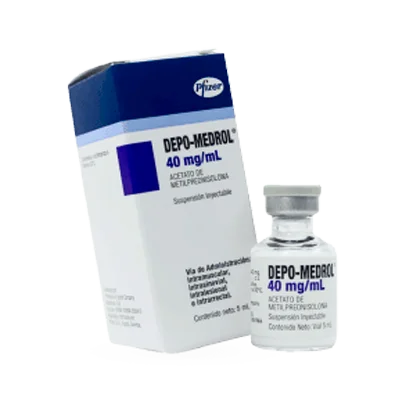
Depo-Medrol is a long-acting corticosteroid injection for adults needing treatment for selected inflammatory conditions. It can be used for joint, soft-tissue, allergic, skin, or systemic inflammation. The suspension releases methylprednisolone gradually to reduce immune-driven swelling, pain, and stiffness.
Description
Depo-Medrol is a long-acting injectable corticosteroid containing methylprednisolone acetate. The dose is stated on the pack — follow the leaflet. It is a glucocorticoid corticosteroid injection. The active substance is methylprednisolone acetate.
Composition
Depo-Medrol is supplied as a vial containing injectable methylprednisolone acetate suspension at 40 mg/mL. The vial is intended for administration by a qualified healthcare professional who selects the route and amount for the individual clinical situation.
Dosage and usage
Depo-Medrol is administered by a healthcare professional. It is not a self-injection product and should not be injected into a vein, spinal area, or tissue affected by untreated infection.
Administration is based on several clinical factors:
the diagnosis and treatment goal;
whether treatment is local or systemic;
the size and location of the affected joint or lesion;
previous response to corticosteroids;
diabetes, blood pressure, bone health, and infection history;
concurrent medicines, including anticoagulants and immunosuppressants.
For an intra-articular injection, clinicians use sterile technique and may remove excess joint fluid before treatment when appropriate. This detail can improve comfort and help distinguish inflammatory fluid from possible infection. Repeated injections into the same area need review because corticosteroids can weaken nearby tissue and may contribute to joint or tendon complications.
Tell the prescriber about any vaccine planned soon, recent infection, dental procedure, or surgery. Corticosteroids can alter immune responses and may affect timing decisions.
How it works
Methylprednisolone acetate is a synthetic corticosteroid with glucocorticoid activity. It enters cells and binds to glucocorticoid receptors, which then alter the expression of genes involved in inflammation. This lowers production of inflammatory mediators such as cytokines, prostaglandins, and leukotrienes.
The result is reduced redness, warmth, fluid accumulation, tissue swelling, and immune-cell activity. In an inflamed joint, this may ease pain and improve movement. In allergic or skin conditions, it may reduce itching, swelling, and inflammatory flare-ups.
The FDA prescribing information (2021) for methylprednisolone acetate describes its anti-inflammatory and immunosuppressive actions, alongside the need for careful selection of route and dose. [1]
Indications
Clinicians use Depo-Medrol where corticosteroid treatment is appropriate and a local or sustained injection is preferred. The exact indication and injection route depend on the diagnosis, severity, affected tissue, infection risk, and prior treatments.
Common clinical uses include:
inflammatory arthritis, including rheumatoid arthritis;
osteoarthritis with an inflamed joint;
bursitis, including shoulder, hip, or elbow bursitis;
selected tendon and soft-tissue inflammatory conditions;
allergic disorders that require systemic corticosteroid treatment;
inflammatory skin disorders where intralesional treatment is clinically appropriate;
some systemic rheumatic and autoimmune conditions.
A joint injection can calm inflammation inside one troublesome joint, yet it does not treat every cause of joint pain. Mechanical injury, fracture, septic arthritis, and nerve-related pain need different assessment and treatment. NICE guidance may also inform treatment decisions for inflammatory joint disease.
New fever, a hot rapidly swollen joint, or severe pain after an injection needs urgent medical assessment because infection must be excluded.
Comparison
Depo-Medrol differs from oral methylprednisolone and prednisolone mainly by route, release pattern, and treatment purpose. Injectable depot treatment can provide local or sustained action, while oral corticosteroids are more often used when a clinician needs adjustable day-to-day systemic treatment.
Treatment approach
Main feature
Typical clinical role
Depo-Medrol injection
Methylprednisolone acetate depot suspension
Local joint, soft-tissue, intralesional, or selected systemic treatment
Oral methylprednisolone
Shorter-acting systemic tablet treatment
Conditions needing flexible dose adjustment
Oral prednisolone
Systemic corticosteroid tablet treatment
Broad inflammatory and autoimmune indications
An injection may be preferred when one joint is driving disability, or when short-term local suppression of inflammation is needed. Tablets may be preferred when symptoms affect several body systems and the dose needs frequent adjustment. Neither option is automatically better; the diagnosis determines the route.
Repeated injections are not a substitute for investigating persistent swelling, progressive loss of movement, or unexplained pain.
Contraindications
Depo-Medrol is not for people with a known allergy to methylprednisolone acetate or another component of the injection, a systemic fungal infection, or an infection at the planned injection site. It must not be used by intrathecal, epidural, or intravenous injection.
Important interaction groups include anticoagulants, antidiabetic medicines, diuretics that lower potassium, non-steroidal anti-inflammatory drugs, enzyme-inducing medicines used for epilepsy or tuberculosis, and other immunosuppressive therapies. Combining systemic corticosteroids with NSAIDs can raise the risk of stomach ulceration or bleeding. Live vaccines are generally avoided during immunosuppressive corticosteroid treatment.
When this is not for you
Depo-Medrol is not for you if you have a known allergy to methylprednisolone acetate or another component of the injection, a systemic fungal infection, or an infection at the planned injection site. It must not be used by intrathecal, epidural, or intravenous injection.
Extra caution is needed if you have diabetes, glaucoma, cataracts, hypertension, heart failure, osteoporosis, peptic ulcer disease, epilepsy, a history of severe depression or psychosis, tuberculosis exposure, or recurrent infections. Corticosteroids can mask signs of infection, so symptoms may appear less obvious while the infection progresses.
The European Medicines Agency highlights that systemic corticosteroids can cause psychiatric reactions, including sleep disturbance, mood changes, and severe behavioural symptoms in a smaller group of patients. [3]
Side effects
Side effects vary with the injection route, amount used, frequency of treatment, and individual sensitivity. A single local injection may cause few systemic effects, while repeated or systemic exposure increases the chance of broader corticosteroid effects.
Local effects can include pain, swelling, redness, bruising, temporary discomfort after injection, skin thinning, lighter skin colour around the injection site, or local fat loss. Some people experience a short-lived increase in pain after an intra-articular injection, sometimes called a post-injection flare.
Systemic effects may include:
increased appetite or fluid retention;
temporary rise in blood glucose;
mood changes, irritability, anxiety, or disturbed sleep;
indigestion;
elevated blood pressure;
facial flushing;
menstrual changes;
increased susceptibility to infection.
More serious effects are less common but require prompt medical attention. These include allergic reaction, severe mood or behavioural change, visual disturbance, black stools or vomiting blood, marked breathlessness, severe weakness, or signs of infection such as fever and worsening local redness.
Corticosteroids can raise glucose even in people without diagnosed diabetes. A person with diabetes may need more frequent glucose monitoring after an injection, especially during the first days after systemic or large-joint treatment.
Sleep disruption is a small but frequent practical issue. When a clinician has flexibility over timing, earlier-day administration may be preferable for people who previously experienced steroid-related insomnia.
Common mistakes
Several avoidable mistakes can make corticosteroid treatment less useful or increase risk:
assuming every painful joint needs a steroid injection;
failing to mention fever, recent antibiotics, infected skin, or a non-healing wound;
overlooking diabetes medicines or anticoagulants during the medication review;
returning to heavy loading of an injected tendon or joint too soon;
treating post-injection worsening as normal when pain becomes severe or is accompanied by fever;
repeating corticosteroid exposure without discussing bone health, blood pressure, glucose, or mood effects.
One common misconception is that reduced pain means damaged tissue has healed. Corticosteroids reduce inflammation, so improved comfort should be used to support gradual recovery rather than immediate overuse of the affected area.
What doctors say
In clinical practice, doctors often reserve depot corticosteroid injections for clearly inflammatory symptoms that have not settled with appropriate non-steroid measures, or when targeted treatment can improve function. The expected benefit is reduction in inflammation, not permanent resolution of the underlying disease.
For arthritis, a clinician may use the injection to help someone move more comfortably while longer-term treatment is adjusted. For bursitis or local soft-tissue inflammation, the injection can reduce a painful flare, though rehabilitation and activity modification may still be needed. A good response is useful information, but a short response does not justify automatic repeat injections without reassessing the diagnosis.
Doctors also watch for the less obvious effects. Elevated glucose, insomnia, agitation, and facial flushing may matter more to an individual patient than local injection discomfort.
Frequently asked questions
How quickly can Depo-Medrol start to work?
Depo-Medrol may start reducing inflammation within several days, although the timing differs between intramuscular, intra-articular, and intralesional use. Local joint symptoms can improve gradually rather than immediately because methylprednisolone acetate is a depot suspension. The FDA prescribing information describes route-dependent corticosteroid effects and does not support a single universal onset time for every condition. [1]
How long can the benefit of a Depo-Medrol injection last?
Duration depends on the condition, injection site, amount administered, and individual inflammatory activity. Some people report improvement for days or weeks, while others have a shorter response. A prolonged response does not mean the underlying condition has disappeared, and return of symptoms may need reassessment rather than automatic reinjection. The MHRA product information (2023) supports individualised dosing and follow-up for injectable methylprednisolone acetate. [2]
Can Depo-Medrol affect blood sugar?
Yes. Corticosteroids can increase blood glucose by changing insulin sensitivity and glucose production in the liver. This effect is relevant for people with type 1 diabetes, type 2 diabetes, pre-diabetes, or previous steroid-related hyperglycaemia. Diabetes treatment may need temporary adjustment after a clinician-led injection, especially when systemic exposure is expected. The FDA prescribing information (2021) describes glucose-related effects after corticosteroid exposure.
Can alcohol be used after a Depo-Medrol injection?
Alcohol does not have a simple direct interaction with every corticosteroid injection, yet it can worsen stomach irritation, fluid retention, mood changes, sleep disruption, and glucose control. The concern is greater when alcohol is combined with NSAIDs or when there is a history of ulcer disease, liver disease, diabetes, or high blood pressure. A prescriber can give individual advice based on the treatment route and medical history. The FDA prescribing information (2021) supports reviewing individual risk factors before treatment.
Can Depo-Medrol be used during an infection?
Active untreated infection requires careful assessment before corticosteroid treatment because methylprednisolone can suppress inflammatory signs and reduce immune responses. An infected joint, infected skin near the injection site, or systemic fungal infection are major concerns. Fever, chills, new productive cough, painful urination, or spreading redness should be disclosed before treatment. The FDA prescribing information (2021) also emphasises assessing infection risk before corticosteroid treatment.
Can Depo-Medrol cause mood changes?
Yes. Corticosteroids can cause insomnia, restlessness, irritability, low mood, anxiety, or, rarely, severe psychiatric symptoms such as mania, confusion, or psychosis. These effects may occur soon after treatment and can affect people without a previous mental-health diagnosis. Anyone with a history of bipolar disorder, severe depression, psychosis, or steroid-related mood reactions should make this clear during the prescribing assessment. The EMA assessment report (2010) describes psychiatric reactions associated with corticosteroid treatment.
Do you offer anonymous delivery?
Your order will be securely packed and shipped within 24 hours. This is exactly what your package will look like (images of an actual item sent). It has the size and look of a regular private letter (24x11x0.7 cm) and its contents cannot be seen.
My knee had been swollen for months and stairs were difficult. The injection was uncomfortable for a minute, then the aching eased over the next four days. I could walk farther, although the benefit was not immediate.
23 Aug 2026
R
Rebecca, 46
Leeds
Three weeks
Verified
Rating: 3.5 out of 5
The first night was rough because I felt wired and slept badly. My shoulder movement improved by the end of the first week, and the physiotherapy exercises became easier to do.
29 Aug 2026
S
Sarah, 67
Bristol
One month
Verified
Rating: 3.5 out of 5
My glucose readings ran higher for several days, which had been discussed beforehand. The pain relief was useful, but I needed to adjust my diabetes routine with my clinical team.
7 Sept 2026
A
Amelia, 39
London
Two weeks
Verified
Rating: 3.5 out of 5
I expected it to work the same afternoon and was disappointed at first. By day five, the swelling had reduced, but I was advised not to return straight away to gym training.
21 Sept 2026
Sources
U.S. Food and Drug Administration (2021). DEPO-MEDROL: methylprednisolone acetate injectable suspension, prescribing information.
Medicines and Healthcare products Regulatory Agency (2023). Depo-Medrone 40 mg/ml Suspension for Injection: Summary of Product Characteristics.
European Medicines Agency (2010). Assessment report: corticosteroids and psychiatric reactions.