Verified
My prolactin result dropped steadily and my periods returned during the second month. I felt nauseous after the first two doses, then started taking it after dinner and that made a real difference.
1 Sept 2026

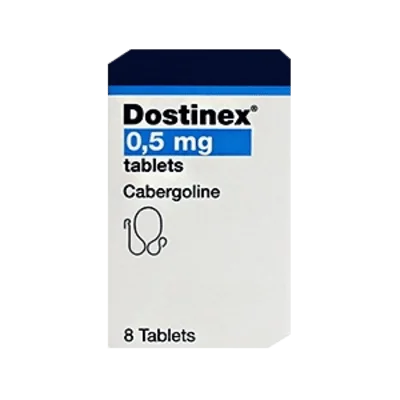
Dostinex is a prescription tablet containing cabergoline for adults with raised prolactin. It is used for hyperprolactinaemia and related reproductive or milk-production problems. Cabergoline lowers prolactin by activating dopamine pathways in the pituitary gland.
Dostinex is a cabergoline tablet used to lower raised prolactin levels in adults. Cabergoline activates dopamine pathways that reduce prolactin release from the pituitary gland.
Dostinex tablets contain cabergoline, a long-acting dopamine receptor agonist. The dose is stated on the pack — follow the leaflet. The pack contains eight tablets.
Dostinex is taken exactly on the weekly schedule set by the prescriber. For hyperprolactinaemia, the dose is stated on the pack — follow the leaflet.
The dose may be increased gradually when prolactin remains raised. The appropriate dose range is stated on the pack — follow the leaflet. For established lactation suppression, follow the dose stated on the pack and the leaflet.
If a dose is missed, do not double the next one. Cabergoline remains active for a long time, and taking extra can increase nausea, dizziness, fainting, or low blood pressure. The MHRA advises reporting suspected adverse drug reactions through the Yellow Card scheme, including reactions linked to dose errors [2].
Cabergoline is the active ingredient in Dostinex. It is a dopamine receptor agonist, meaning that it acts like dopamine at D2 dopamine receptors in the pituitary gland.
Dopamine naturally acts as a brake on prolactin production. Cabergoline strengthens that braking signal, lowering prolactin secretion and allowing reproductive hormone signalling to recover where high prolactin was the cause of disruption.
The Endocrine Society guideline identifies dopamine agonists as first-line treatment for symptomatic prolactinomas and other clinically significant hyperprolactinaemia [1].
Cabergoline is used when excess prolactin disrupts reproductive hormones, menstrual cycles, sexual function, or milk production outside breastfeeding.
Raised prolactin is called hyperprolactinaemia. It may result from a prolactinoma, which is a usually benign pituitary tumour that produces prolactin, or from other medical causes and medicines. In women, high prolactin can cause galactorrhoea, amenorrhoea, irregular cycles, reduced ovulation, and infertility. In men, it may contribute to low libido, erectile difficulties, reduced testosterone, and infertility.
Dostinex and bromocriptine are both dopamine agonists used to lower prolactin. Cabergoline generally has a longer action, making weekly dosing possible, while bromocriptine usually requires daily dosing.
| Feature | Dostinex: cabergoline | Bromocriptine |
|---|---|---|
| Dopamine action | D2 receptor agonist | Dopamine receptor agonist |
| Typical schedule | Once or twice weekly | Usually daily |
| Practical limitation | Requires attention to cardiac and fibrotic warnings in longer treatment | Gastrointestinal effects and frequent dosing can limit adherence |
Cabergoline is often preferred for prolactinoma treatment because it is potent and convenient. Bromocriptine remains an established alternative when cabergoline is not tolerated or when a specialist selects it for a specific clinical reason. Both treatments require follow-up prolactin testing, and pituitary imaging may be needed for a known prolactinoma. The 2023 Pituitary Society consensus statement supports cabergoline as the preferred dopamine agonist for most prolactinomas while recognising individual treatment decisions [3].
Known allergy to cabergoline, other ergot derivatives, or any tablet ingredient.
A history of pulmonary, pericardial, or retroperitoneal fibrotic disorders, or evidence of cardiac valvulopathy.
This is not for you if you have an allergy to cabergoline, other ergot medicines, or any tablet ingredient. You should also not use it if you have had lung, heart-sac, or abdominal fibrotic disorders, or if you have heart-valve disease.
Speak with a clinician before treatment if you have uncontrolled or pregnancy-related high blood pressure, severe liver problems, a history of psychosis or serious mental-health symptoms, or previous problems with compulsive behaviour. Tell the prescriber if you are pregnant, planning pregnancy, or breastfeeding. Cabergoline can restore ovulation, so pregnancy may occur before menstruation appears regular. Severe or persistent headache with visual disturbance needs urgent assessment.
Most adverse effects are linked to dopamine activity or reduced blood pressure. Nausea is very common. Headache, dizziness, vertigo, tiredness, abdominal pain, indigestion, constipation, vomiting, breast pain, and postural hypotension can also occur.
Postural hypotension means blood pressure drops after standing. It can cause a brief wave of light-headedness, blurred vision, or feeling unsteady. Rise slowly from bed or a chair during the first weeks and after dose increases.
Less common but medically significant reactions include mood changes, depression, excessive sleepiness, sudden sleep episodes, and impulse-control problems. These can involve compulsive gambling, spending, eating, or unusually increased sexual urges. Such changes can be embarrassing, which is why they are sometimes recognised late.
Long-term or higher-dose exposure to ergot-derived dopamine agonists has been associated with fibrotic reactions affecting heart valves, the lungs, or tissues behind the abdomen. Symptoms such as persistent breathlessness, chest pain, a dry persistent cough, swollen ankles, or flank pain need prompt medical assessment. Specialist monitoring may include cardiac examination and echocardiography before and during prolonged treatment.
Taking Dostinex daily instead of weekly is a serious dosing mistake. Its long action means that doubling up after a missed dose can produce avoidable adverse effects.
Another frequent issue is stopping after one normal prolactin result. Prolactin can rise again if the underlying driver remains present. Scheduled blood tests are more informative than symptoms alone.
Some people also miss early low-blood-pressure symptoms. A near-fainting episode after standing, repeated dizziness, or unusual sleepiness should be reported promptly rather than dismissed as fatigue.
In endocrine practice, clinicians look for a measurable response rather than judging treatment by symptoms alone. Prolactin levels should decline, and symptoms such as galactorrhoea, cycle disruption, or sexual dysfunction may improve progressively rather than overnight.
Doctors also ask directly about dizziness, mood changes, sleepiness, and behavioural changes. People may not connect new compulsive spending or a sudden increase in gambling with a hormone medicine, especially if the change develops gradually. For long-term cabergoline use, heart-valve assessment is tailored to cumulative dose and individual risk factors.
Cabergoline can start reducing prolactin soon after treatment begins, though symptom improvement varies. Galactorrhoea, menstrual regularity, libido, and fertility may recover at different speeds. Follow-up blood tests show whether the prescribed dose is working. The Endocrine Society guidance published in 2011 supports prolactin monitoring during dopamine-agonist treatment .
Dostinex can improve fertility when high prolactin is preventing normal ovulation or suppressing reproductive hormone function. Ovulation may return before menstrual cycles look regular, so pregnancy can occur unexpectedly. Fertility problems can have more than one cause, and cabergoline only addresses the prolactin-related component. The 2025 electronic Medicines Compendium (eMC) Summary of Product Characteristics lists restoration of gonadal function as a treatment goal in hyperprolactinaemic disorders.
Take the next scheduled dose rather than doubling the dose. Cabergoline has a long duration of action, so extra tablets increase the chance of nausea, dizziness, low blood pressure, and excessive sleepiness. Repeated missed doses can make prolactin control less reliable. The MHRA’s 2023 Yellow Card guidance supports reporting harmful dosing errors.
Yes. Cabergoline may lower blood pressure, mainly when treatment starts or the dose increases. Dizziness after standing is a recognised effect, and fainting needs urgent clinical attention. Taking the tablet with food may reduce nausea, though it does not remove the blood-pressure effect. The 2025 electronic Medicines Compendium (eMC) Summary of Product Characteristics lists hypotension and dizziness among recognised adverse reactions.
Some people use cabergoline for months or longer, especially when treating a prolactinoma or persistent hyperprolactinaemia. Long-term treatment is monitored with prolactin testing and, where appropriate, assessment for cardiac-valve or fibrotic complications. The duration depends on response, tumour behaviour, and recurrence risk after dose reduction. The Pituitary Society’s 2023 consensus statement describes periodic reassessment rather than an automatic fixed stopping date .
Some anti-sickness medicines, including metoclopramide, and several antipsychotic medicines block dopamine receptors. They can oppose cabergoline’s action and reduce its prolactin-lowering effect. Macrolide antibiotics may increase cabergoline exposure instead. A prescriber should review these combinations before they are started or changed. The 2025 electronic Medicines Compendium (eMC) Summary of Product Characteristics provides interaction information for these treatment decisions.
Your order will be securely packed and shipped within 24 hours. This is exactly what your package will look like (images of an actual item sent). It has the size and look of a regular private letter (24x11x0.7 cm) and its contents cannot be seen.





Dostinex prescribing information covers its approved uses, dose schedules, adverse effects, interactions, contraindications, and monitoring requirements. These details matter because the same 0.5 mg tablet can be used in very different ways for hyperprolactinaemia or lactation suppression.
Prolactin blood tests guide treatment response. A falling result often appears before every symptom resolves. With a prolactinoma, the clinician may also monitor headaches, vision changes, menstrual function, testosterone-related symptoms, and pituitary scan findings.
Do not stop Dostinex abruptly solely because symptoms improve. The decision to reduce or stop treatment is based on prolactin levels, duration of control, tumour status where relevant, and the original reason for treatment.
