Verified
I used it during a bad spell of itchy hives. It settled the itching enough for me to sleep, but I felt slow and fuzzy until mid-morning. I would only take it when I had no early drive planned.
6 Sept 2026

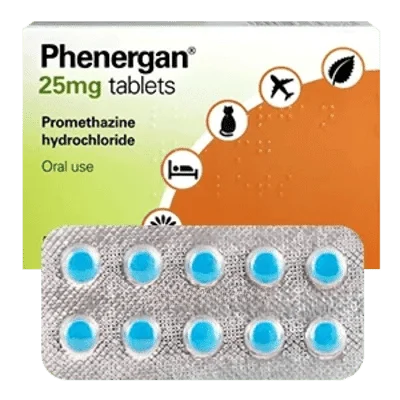
Phenergan is an oral tablet containing promethazine hydrochloride. It is intended for allergic symptoms, nausea and vomiting, motion sickness, and short-term sleep difficulty, with antihistamine, antiemetic, and sedative effects.
Phenergan tablets contain promethazine hydrochloride. The dose is stated on the pack — follow the leaflet. Promethazine belongs to the phenothiazine group and is a first-generation antihistamine. First-generation means it reaches the brain more readily than newer antihistamines, which explains both its calming effect and its tendency to cause drowsiness.
Phenergan tablets contain promethazine hydrochloride. The dose is stated on the pack — follow the leaflet. Promethazine belongs to the phenothiazine group and is a first-generation antihistamine. First-generation means it reaches the brain more readily than newer antihistamines, which explains both its calming effect and its tendency to cause drowsiness.
Histamine is a natural chemical released during an allergic response. It can trigger sneezing, a runny nose, itchy eyes, hives, and skin itching. Blocking histamine can reduce these symptoms. Promethazine also affects signalling in the brain involved in nausea, vomiting, and alertness. [1]
Promethazine has antihistamine activity that reduces symptoms driven by histamine, such as itching and sneezing. Its antiemetic and sedative actions affect signalling involved in nausea, vomiting, and alertness.
Phenergan can relieve several symptoms because promethazine has antihistamine, antiemetic, and sedative actions.
For hay fever, Phenergan can help with sneezing and itching, though its drowsiness often makes it less suitable than non-sedating antihistamines during a working day. For nausea and travel sickness, its action on the vomiting centre can be useful before symptoms become intense. The NHS lists promethazine for allergies, travel sickness, nausea, vomiting, and short-term sleep problems. [2]
Phenergan contains promethazine hydrochloride. The active ingredient, rather than the tablet name, determines the medicine’s pharmacological effect.
| Option | Main mechanism | Practical difference |
|---|---|---|
| Promethazine in Phenergan | First-generation H1 antihistamine with antiemetic and sedative effects | Useful when allergy symptoms, nausea, or short-term sleep difficulty occur together; drowsiness is common |
| Non-sedating H1 antihistamine | Peripheral H1 blockade | Often preferred for daytime allergy symptoms because alertness is less affected |
| Prescription antiemetic | Varies by medicine | May be selected when vomiting is severe, persistent, or linked to a specific medical cause |
A non-sedating antihistamine may suit daytime hay fever better. Phenergan has a distinct role when nausea, motion sickness, troublesome night-time itching, or short-lived insomnia are central concerns. The trade-off is impaired alertness.
Use needs careful consideration if you have:
Alcohol increases sedation and impaired coordination. Opioid painkillers, benzodiazepines, sleeping medicines, sedating antidepressants, antipsychotics, and other sedating antihistamines can also intensify drowsiness or breathing suppression.
Phenergan is not for you if you have had an allergic reaction to promethazine, other phenothiazines, or any ingredient in the tablets. It must not be used by children under two years because promethazine can dangerously suppress breathing.
Phenergan may make the skin more sensitive to sunlight. Use sensible sun protection during prolonged outdoor exposure. Avoid driving and machinery until you know how the tablets affect you.
Drowsiness is the most common effect of Phenergan. Dizziness, dry mouth, blurred vision, constipation, difficulty passing urine, headache, and reduced concentration can also occur. Some people feel a “hangover” effect the next day, even after what felt like a normal night’s sleep.
Potential side effects include:
Stop taking Phenergan and seek urgent help for facial or throat swelling, breathing difficulty, a widespread blistering rash, fainting, severe confusion, uncontrolled movements, or seizures. These reactions are uncommon but need prompt assessment.
Several avoidable mistakes make Phenergan less useful or increase side effects.
One detail patients often miss is the effect on balance. Getting up quickly during the night can trigger dizziness, especially after alcohol or alongside blood-pressure medicines. Sit on the edge of the bed for a moment before standing.
In clinical practice, promethazine is often chosen when a patient needs an antihistamine with a sedating or antiemetic effect. The benefit is practical: one medicine can ease itching or nausea while making rest easier. The limitation is equally practical: daytime impairment can be substantial.
Clinicians tend to look closely at other sedating medicines before recommending promethazine. Combining several medicines that slow the central nervous system is a common route to falls, confusion, and excessive sleepiness. Older adults may be more sensitive to anticholinergic effects such as constipation, blurred vision, and urinary retention.
The WHO includes antihistamines and antiemetic medicines within essential symptom-management approaches, while treatment choice still depends on the cause and severity of symptoms. [3]
Promethazine usually begins to cause drowsiness within about 20 minutes to an hour, though timing varies with food, individual sensitivity, and the reason for use. Its sedating effect may last well into the next day for some people. NHS guidance reviewed in 2023 describes promethazine as a sedating antihistamine used for short-term symptom relief. Avoid planning activities that require full alertness after a first dose.
Phenergan can reduce hay fever symptoms such as sneezing, itchy eyes, and a runny nose because it blocks H1 histamine receptors. Its main drawback is sedation, which may limit daytime use. The MHRA's 2020 safety guidance advises that medicines causing drowsiness can impair driving and reaction time, even when a person does not feel heavily sedated. A non-sedating antihistamine is often more practical for daytime symptoms.
Phenergan can prevent and treat travel sickness by reducing signalling involved in nausea and vomiting. Taking it before a journey is generally more useful than waiting until symptoms are severe. The NHS information updated in 2023 includes travel sickness among promethazine uses. Alcohol should be avoided during travel because it can markedly increase drowsiness and poor coordination.
Phenergan is intended for short-term sleep disturbance rather than long-term insomnia. Repeated use can mask problems such as anxiety, depression, sleep apnoea, pain, reflux, stimulant use, or an irregular sleep schedule. NICE insomnia guidance, current in 2026, prioritises identifying the cause and behavioural sleep measures for persistent symptoms. If sleep difficulty lasts for weeks, a clinical review is more appropriate than escalating sedating antihistamine use.
Paracetamol does not usually cause sedation and is less likely to add to Phenergan’s drowsy effect. Opioid painkillers, including codeine, tramadol, morphine, and oxycodone, can increase sedation and breathing risk when combined with promethazine. The EMA's 2024 safety information warns that combining central nervous system depressants can amplify impairment. A prescriber should assess combinations involving opioids, sleeping medicines, or medicines for anxiety.
Promethazine is sometimes prescribed during pregnancy for nausea or severe itching, but pregnancy use needs individual assessment. The NHS's 2023 guidance states that promethazine may be used in pregnancy when a clinician considers it appropriate. The choice depends on symptoms, stage of pregnancy, other medicines, and medical history. Do not use it for pregnancy-related nausea without a pregnancy-specific medication review.
Your order will be securely packed and shipped within 24 hours. This is exactly what your package will look like (images of an actual item sent). It has the size and look of a regular private letter (24x11x0.7 cm) and its contents cannot be seen.





