Verified
The first ten days brought nausea and a strange wired feeling in the evenings. By the sixth week, I was still anxious at times, but I stopped waking with dread every morning and could use public transport again.
25 Sept 2026

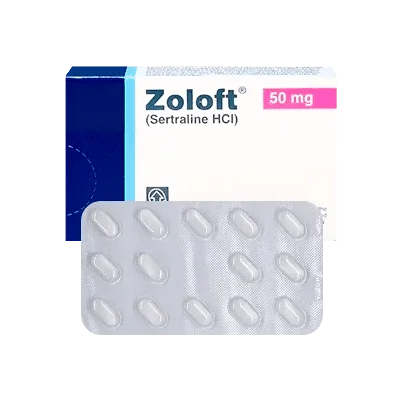
Zoloft is a sertraline hydrochloride antidepressant for adults and selected younger people under specialist supervision. It helps manage depression and anxiety-related conditions by increasing serotonin signalling between brain cells.
Zoloft is a tablet containing sertraline hydrochloride, a selective serotonin reuptake inhibitor used for depression and several anxiety-related conditions. It is prescribed for adults and, in selected indications, younger people under specialist supervision. Sertraline increases serotonin signalling between brain cells, which can reduce persistent low mood, panic, intrusive thoughts, and anxiety.
Zoloft tablets contain sertraline hydrochloride; the dose is stated on the pack — follow the leaflet. Sertraline belongs to the selective serotonin reuptake inhibitor, or SSRI, class of antidepressants. SSRIs act on serotonin, a neurotransmitter involved in mood, sleep, appetite, emotional regulation, and fear responses.
Sertraline slows the reabsorption of serotonin by nerve cells. More serotonin remains available in the gap between nerve cells, allowing signalling pathways involved in mood and anxiety to adjust gradually.
This process takes time. A tablet does not create an immediate calming effect.
SSRIs are among the most widely used antidepressants in UK clinical practice. Zoloft is prescribed for major depressive disorder, obsessive-compulsive disorder, panic disorder, post-traumatic stress disorder, social anxiety disorder, and premenstrual dysphoric disorder, depending on the person’s diagnosis and clinical history.
The dose is stated on the pack — follow the leaflet.
A prescriber adjusts treatment according to response, adverse effects, age, and other medicines.
Zoloft can be taken with or without food. Taking it with a meal can reduce nausea or stomach discomfort for some people.
Alcohol can worsen drowsiness, impaired judgement, low mood, and sleep disruption. Grapefruit juice is not a major interaction concern with sertraline in the way it is with some medicines, yet consistent dietary habits make side-effect patterns easier to interpret.
Sertraline slows the reabsorption of serotonin by nerve cells. More serotonin remains available in the gap between nerve cells, allowing signalling pathways involved in mood and anxiety to adjust gradually.
Zoloft is used when symptoms are persistent, impair daily function, or recur. The diagnosis determines the dose strategy and expected timeline.
NICE guidance supports SSRIs as an option for depression and several anxiety disorders, with treatment choices shaped by symptom severity, previous response, physical health, and personal priorities [2].
For anxiety, Zoloft reduces the intensity and frequency of symptoms over time rather than acting as an immediate sedative. People may first notice fewer panic episodes, less avoidance, or reduced physical symptoms such as chest tightness, trembling, and constant anticipatory worry.
A meaningful response often takes four to six weeks, while obsessive-compulsive symptoms may take longer. Psychotherapy, sleep routines, and gradual exposure work can strengthen outcomes for anxiety disorders.
SSRIs share a core mechanism, yet they differ in interaction profiles, withdrawal potential, activating effects, and usefulness for individual symptom patterns. The best choice often comes from previous response, co-existing conditions, and tolerability rather than a universal ranking.
| Active ingredient | Typical clinical pattern | Common limitations |
|---|---|---|
| Sertraline | Used for depression, obsessive-compulsive disorder, panic disorder, PTSD, and social anxiety | Nausea or diarrhoea can be prominent early on |
| Fluoxetine | Often activating and long-lasting; used for depression and OCD | Can disrupt sleep or increase restlessness |
| Escitalopram | Often selected for depression and generalised anxiety symptoms | Sexual effects, nausea, and dose-related QT concerns |
| Paroxetine | Can help anxiety disorders but is less often preferred in pregnancy planning | Weight gain, sedation, and more difficult withdrawal |
Prozac contains fluoxetine, Lexapro contains escitalopram, and Paxil contains paroxetine. Escitalopram is often viewed as having a balanced interaction profile, while paroxetine tends to cause more discontinuation symptoms because of its shorter half-life. Sertraline is frequently chosen when depression and anxiety occur together, though gastrointestinal effects can be a limiting factor.
Zoloft is not for you if you are taking, or have taken within the past 14 days, a monoamine oxidase inhibitor such as phenelzine, tranylcypromine, isocarboxazid, selegiline, or moclobemide. It is also unsuitable with linezolid or intravenous methylene blue unless a specialist has made a managed treatment plan.
Extra caution is needed with:
Avoid Zoloft if you are taking, or have recently taken, certain MAOIs, linezolid, or intravenous methylene blue unless a specialist has planned the treatment. Tell your prescriber if you have epilepsy, bipolar disorder, glaucoma, liver problems, low blood sodium, or take medicines that increase serotonin or bleeding risk. Pregnancy, breastfeeding, and plans for pregnancy also need an individual medical review.
Most adverse effects are mild to moderate and are more noticeable during the first one or two weeks. Nausea, loose stools, dry mouth, headache, sweating, tremor, tiredness, insomnia, and changes in appetite are common.
Sexual effects can include reduced libido, delayed orgasm, difficulty reaching orgasm, or erectile difficulties. These effects deserve a direct conversation with the prescriber rather than silent dose-skipping. The MHRA has warned that sexual dysfunction linked to SSRIs may persist after treatment is stopped in a small number of people.
More urgent symptoms need prompt medical assessment:
Serotonin syndrome is an excessive serotonin reaction. It may involve agitation, confusion, sweating, diarrhoea, fever, rapid heartbeat, muscle stiffness, tremor, or loss of coordination. It is more likely when sertraline is combined with other serotonin-increasing medicines. The FDA prescribing information carries warnings on suicidality in younger people, serotonin syndrome, bleeding risk, seizures, and abrupt discontinuation [1].
Several avoidable patterns make Zoloft feel less tolerable or less useful than it could be.
In clinical practice, doctors often assess the pattern behind a person’s symptoms before judging whether Zoloft is helping. Panic symptoms may ease before low mood lifts. Obsessive thoughts may become less sticky before compulsive behaviours reduce. This staggered improvement is common.
Clinicians also look for activation after starting treatment. A person who becomes unable to sleep, unusually impulsive, intensely restless, or markedly more energetic needs a review for dose-related activation or an unrecognised bipolar-spectrum condition.
Treatment response should be measured using daily function, not only mood. Returning to work tasks, attending appointments, leaving the house, or sleeping through the night can be more meaningful markers than a single good day.
Sertraline may cause early physical changes, such as nausea or altered sleep, within days. Improvement in anxiety or mood often starts after two to four weeks, while fuller benefit may take six to eight weeks. The FDA prescribing information, updated in 2023, describes regular daily dosing rather than as-needed use for depression and anxiety-related conditions. A dose review is commonly considered after an adequate trial at a therapeutic dose.
Yes, temporary activation can occur during the first days or weeks. Symptoms may include jitteriness, restlessness, insomnia, increased sweating, or a short-term rise in panic sensations. NICE guidance from 2022 recognises that antidepressant treatment can initially increase anxiety in some people, which is why gradual starting doses are used for panic-related conditions. Severe agitation, suicidal thinking, or inability to sleep needs urgent assessment.
Ibuprofen and other non-steroidal anti-inflammatory drugs can increase bleeding risk when combined with SSRIs. The risk is higher for people who also use aspirin, anticoagulants, corticosteroids, or have a history of stomach ulcers. The MHRA’s 2005 safety advice highlights bleeding risk with SSRIs, especially where medicines affecting platelets or clotting are involved. Paracetamol is often a simpler pain-relief option for many people, though individual medical factors still matter.
Weight can change during treatment, though the pattern is variable. Some people lose appetite or weight early because of nausea, while others gain weight later as appetite, energy, and routine recover. A 2023 FDA label lists appetite and weight changes among possible adverse effects, without suggesting that every person will experience them. A sustained change in weight is worth raising during treatment review.
Sertraline may be used for selected conditions in younger people under specialist supervision. Monitoring is essential because antidepressants can increase suicidal thoughts or behaviours in children, adolescents, and young adults during early treatment. NICE guidance from 2019 recommends structured monitoring and psychological therapy as central elements of care for young people with depression. Parents and carers should report sudden behavioural change, self-harm talk, or agitation promptly.
Stopping suddenly can cause discontinuation symptoms, especially after longer use or higher doses. Dizziness, nausea, vivid dreams, irritability, anxiety, and electric-shock sensations are reported by some people. The WHO mhGAP guidance updated in 2023 supports gradual dose reduction when antidepressant treatment is ending, with the pace tailored to symptoms and duration of use. A slower reduction is often needed if withdrawal symptoms emerge.
Your order will be securely packed and shipped within 24 hours. This is exactly what your package will look like (images of an actual item sent). It has the size and look of a regular private letter (24x11x0.7 cm) and its contents cannot be seen.





Avoid starting St John’s wort while taking Zoloft. It raises serotonin activity and can increase the risk of serotonin syndrome.
Pregnancy decisions involving Zoloft are individual. Untreated depression, panic disorder, or severe anxiety can affect sleep, nutrition, antenatal care, substance use, and bonding, so abruptly stopping an antidepressant after a positive pregnancy test can create problems.
Sertraline may be continued when the expected maternal benefit outweighs potential fetal and newborn risks. Late-pregnancy SSRI exposure can be associated with short-lived newborn adaptation symptoms, including jitteriness, feeding difficulty, respiratory distress, irritability, or altered sleep. These effects usually appear shortly after birth and are managed by neonatal teams when needed.
Breastfeeding decisions also need individual assessment. Sertraline is often considered one of the SSRIs with lower transfer into breast milk, though infant observation remains appropriate. UKTIS pregnancy information describes both the risks of untreated maternal illness and the potential neonatal effects associated with SSRI exposure [3].
